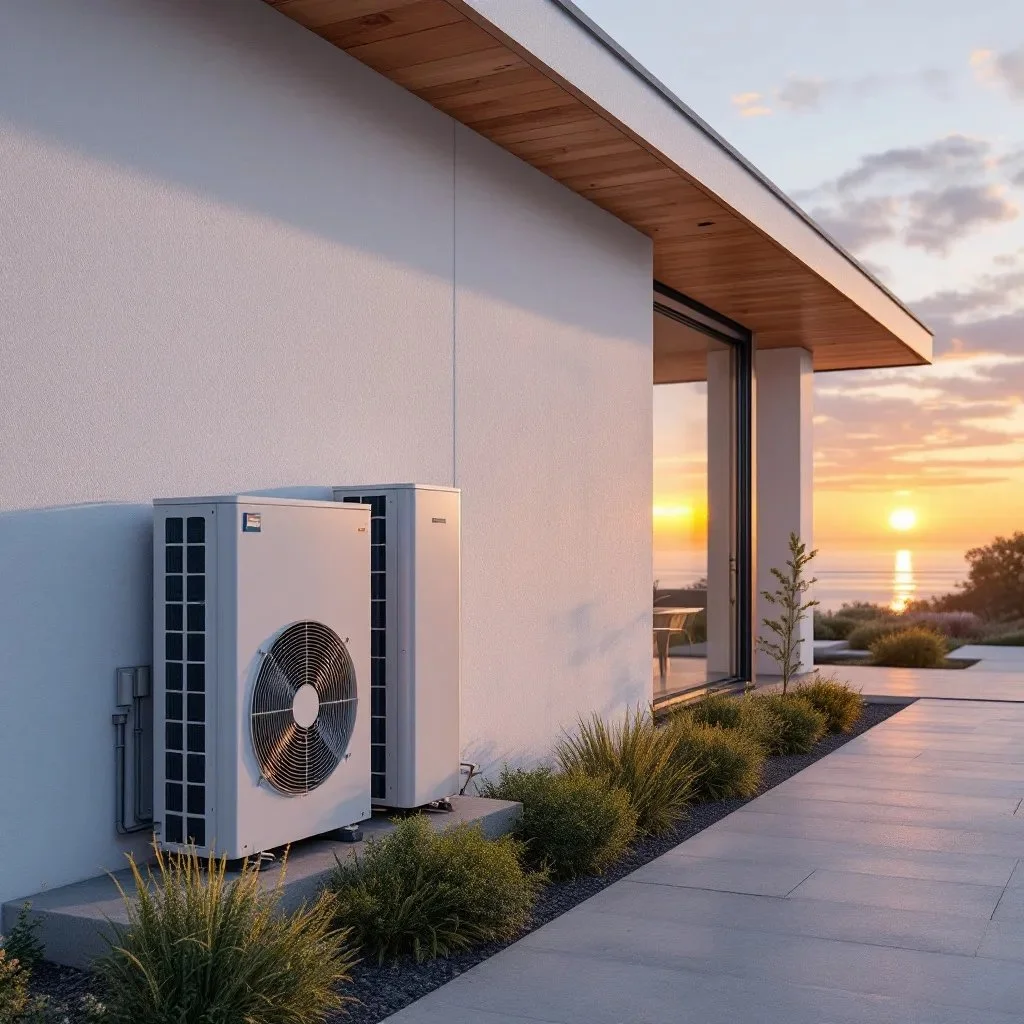
Efficient Heating with Air Source Heat Pumps
Power your home with renewable energy from the air, lowering costs and protecting the planet.
Why Choose an Air Source Heat Pump?
Air source heat pumps are a clean, efficient alternative to traditional heating. By using renewable energy from the air around your home, they provide reliable heating and hot water while reducing your bills and carbon footprint.
-
![Green upward arrow above the text '400%' in gradient green color.]()
Expectional Efficiency
Air source heat pumps can achieve efficiencies of up to 400%. For every 1kW of electricity used, you could generate up to 4kW of heat energy. -
![green gradient spanner icon.]()
Low Maintenance
Fully automated systems that require very little ongoing upkeep.
-
![A stylised green flower with a pound sign in the middle indicating savings that can be made with renewable energy.]()
Cheaper than Oil & Gas
With high efficiency, heat pumps can be a more cost-effective choice than gas, oil, or electric heating — even for homes connected to the gas grid.
-
![Green gradient document icon of an energy bill and a down arrow showing they have decreased.]()
Lower Running Costs
Enjoy significantly reduced heating bills compared to oil, LPG, or electric boilers.
-
![green gradient present icon.]()
Government Support
Generous grants are available through the Boiler Upgrade Scheme, helping to reduce the upfront cost of installation.
-
![A green gradient groups of trees icon indicating sustainability.]()
Future-Ready
A renewable heating system that reduces your reliance on fossil fuels and supports a more sustainable lifestyle.






How it works
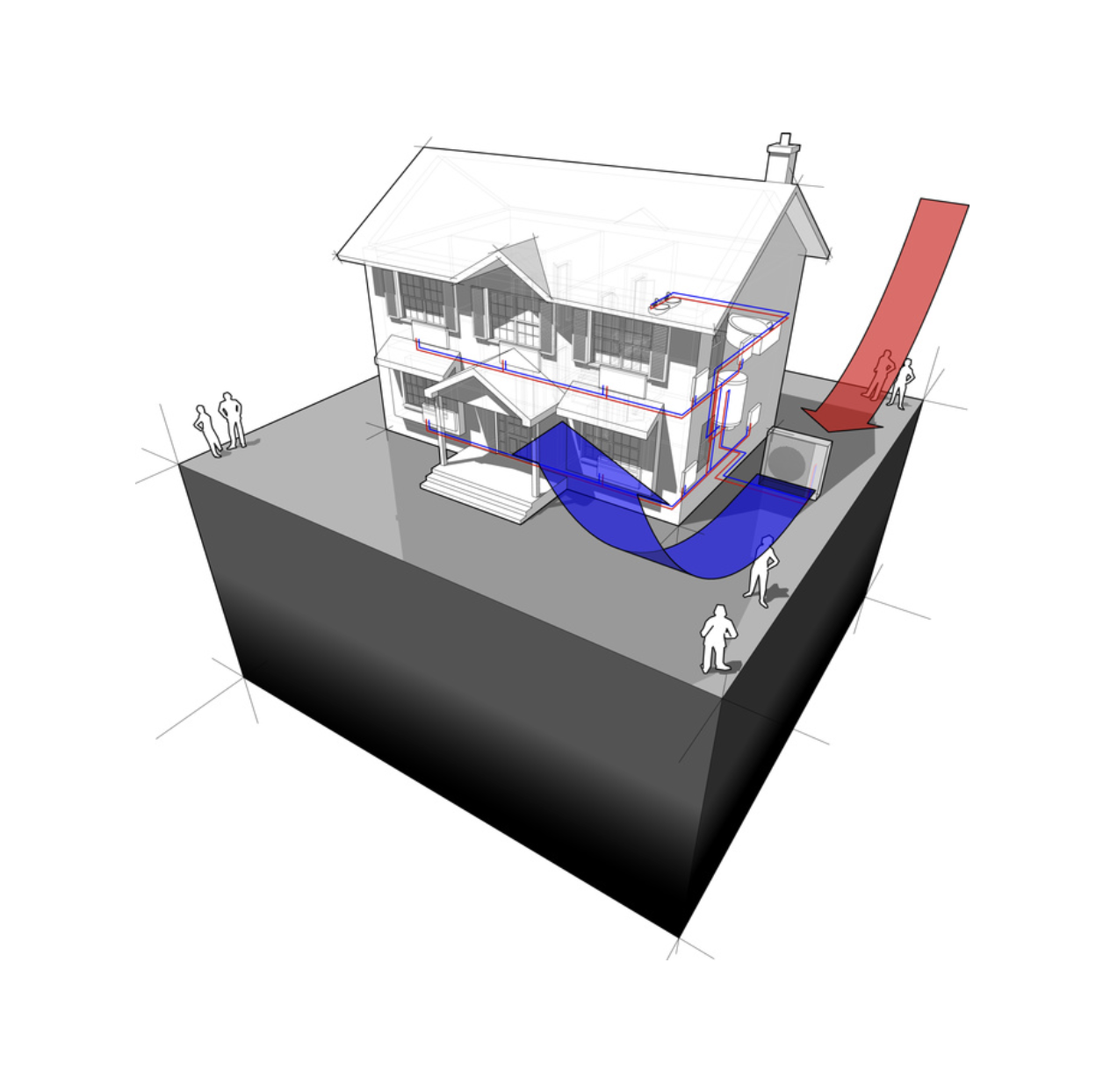
An Air Source Heat Pump is a refrigerant based system, like your refrigerator at home. By taking colder external air from the outside environment, the unit heats refrigerant gases before harnessing the heat through a heat exchanger to provide heating and hot water to the property.
The system absorbs low grade heat from the air, and raises it’s temperature efficiently to be suitable for space heating and/or hot water.
Air source heat pumps are ideally suited to new or very well insulated properties.
Savings & Costs
Air source heat pumps can significantly reduce heating bills, especially if you currently rely on oil, LPG, or electric heating. The actual savings depend on your property size, insulation levels, and current heating setup, but with government support available, they are one of the most cost-effective renewable heating solutions for UK homes.
If you're installing an air source heat pump in Scotland, you may be able to reduce the upfront cost through the Home Energy Scotland Grant and Loan Scheme. Here’s what’s available:

FAQ
-
An air source heat pump (ASHP) is a system that transfers heat from the outside air into your home for heating or reverses the process for cooling. It works like a refrigerator in reverse, using electricity to move heat rather than generate it.
-
ASHPs are best suited for well-insulated homes and areas with moderate winter temperatures. They can still work efficiently in colder climates with the right system and backup heating.
-
Yes, an air source heat pump (ASHP) can heat an entire home, provided it is correctly sized for your property's specific needs and the home is well-insulated.
-
Yes. Modern ASHPs are designed to operate efficiently even at temperatures as low as -15°C (5°F) or lower. However, efficiency and output can decrease extreme cold, and a backup heating system may be beneficial.
-
There are two main types:
Air-to-air heat pump: Heats the air inside your home directly
Air-to-water heat pump: Heats water that circulates through radiators, underfloor heating, or a hot water cylinder.
-
Air source heat pumps (ASHPs) are significantly more energy-efficient than gas boilers, with efficiencies of 300-500% compared to a gas boiler's 90-95%.
-
Efficiency is measured as the Coefficient of Performance (COP). For every 1 kWh of electricity used, an ASHP can produce 2.5–4 kWh of heat, making it 200–400% efficient under ideal conditions.
-
Yes. Many models are reversible, meaning they can work like an air conditioner in summer by transferring heat out of your home.
-
Higher upfront cost compared to traditional systems
May require improved home insulation to be efficient
Performance can drop in very cold weather
Outdoor unit may produce some noise
-
Yes, you can use an air source heat pump with solar panels, and they work very well together by using solar-generated electricity to power the heat pump, making your heating more sustainable and potentially reducing electricity costs. Solar panels provide electricity during the day, which can be used directly by the heat pump, but you will need to draw from the grid or a battery storage system at night or on cloudy days.
How they work together
Direct power: Solar panels generate electricity during the day, which can be used to power the heat pump's electricity needs in real-time.
Reduced grid reliance: This direct usage means you draw less electricity from the grid, making your heating eco-friendlier and reducing your bills.
Battery storage: To use solar power when the sun isn't shining, you can pair your solar panels with a battery storage system to store excess energy for use at night or on cloudy days.
Year-round power: Even when solar generation is low in winter, the heat pump is still an efficient way to heat your home, and the system can draw from the grid when necessary.
-
Typically, 15–20 years, depending on the model and maintenance. Regular service helps maximise lifespan and efficiency.
-
If you have large or low-temperature radiators and good insulation, you might not need major changes. However, ASHPs work best with underfloor heating or larger radiators that operate efficiently at lower water temperatures.
-
Modern units are relatively quiet, typically 40–60 dB, comparable to a refrigerator or light rainfall. Placement of the outdoor unit helps minimise noise impact.
-
Yes, but maintenance is minimal:
Clean or replace filters
Check refrigerant levels
Keep outdoor unit clear of debris and snow
Annual professional service is recommended
Ready To Save a With Air Source Heat Pump
Get in touch today

95-97 Channel Street, Galashiels, TD1 3BN